Khomlainai: A Path to Fitness, Income & Social Change

Khomlainai, a traditional form of Bodo wrestling from Assam, has grown from a cultural game into a force for positive change in the lives of young people across the region. Beyond physical exercise, it is now helping youth break away from harmful lifestyles and find confidence, income, and purpose.

A Traditional Sport with Modern Impact
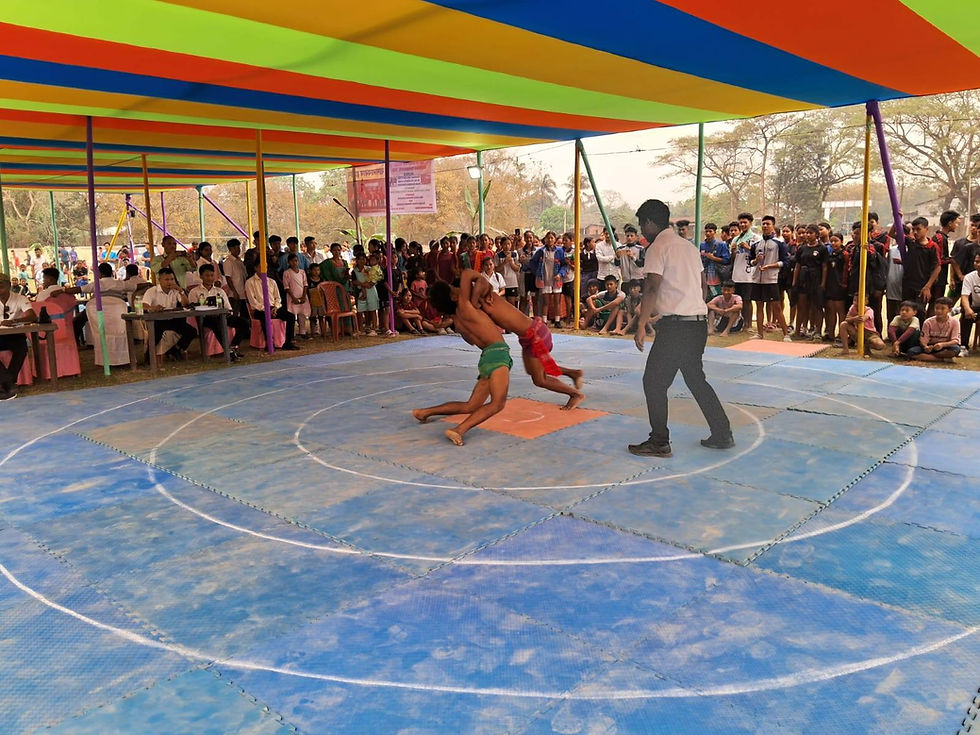
Originally practiced as a self-defence art by Bodo communities, Khomlainai combines physical strength, balance, and traditional rituals — with key terms like aranai (belt), matha (green player), and agor (red player) that reflect its rich cultural roots.
What was once mainly a village pastime is now gaining popularity across Assam and beyond, celebrated during festivals like the Bhaokhungri in Kokrajhar and expanding to include people from diverse backgrounds.
Fighting Alcohol Addiction Through Discipline and Routine
In Chirang district’s Simlaguri village, the rise in alcohol addiction among youth was a serious concern — one that Khomlainai helped address. The sport’s strict discipline prohibits smoking and drinking, providing a healthier routine and a meaningful alternative to harmful habits.
Parents and community members began encouraging their children to participate, not just to improve fitness but to keep them away from alcohol and other distractions. As a result, many children now spend time training, studying, and building discipline that benefits both their mind and body
Fitness, Strength, and Confidence for Girls
For girls like Indira Daimary, Khomlainai isn’t just physical training — it’s a lifeline. Cycling long distances daily to training, Indira used the sport to build fitness and resilience. As she progressed, earning prize money from competitions helped her contribute financially to her family, renovate her home, and support her siblings’ education.
Similarly, Sangita Kisko used her Khomlainai success to pay school fees and continue her education. These stories highlight how the traditional sport is helping young women become physically strong while gaining confidence and financial independence.
Employment Pathways and Broader Opportunities
The physical fitness and discipline learned through Khomlainai have also opened doors to job opportunities, including roles in the Indian Army and police forces — pathways that once seemed out of reach for many rural youth.
This shift is more than economic — it shows how sport and culture can empower individuals socially and economically, breaking cycles of poverty through skill, strength, and dedication.
Growing Recognition and Support
The Indian government’s inclusion of Khomlainai in the Sports Authority of India’s Indigenous Games and Martial Arts scheme has further boosted its reach. This recognition brought training support, scholarships, and structured coaching to young wrestlers, helping expand the sport’s appeal.
Still, coaches and players call for more financial support, infrastructure, and large-scale competitions to elevate Khomlainai to national prominence
Cultural Identity Meets Health & Strength
Khomlainai is more than fitness — it embodies the culture, language, and heritage of the Bodo community. As youth embrace this sport, they not only build healthier bodies but also reconnect with their roots, strengthening cultural pride while inspiring unity across communities.
Conclusion: A Sport That Transforms Lives
Khomlainai’s evolution from a local wrestling game to a powerful tool for health, discipline, economic support, and cultural pride shows how indigenous traditions can shape better futures for youth. Through fitness and focus, young men and women are finding stronger bodies, clearer minds, and real opportunities — both on and off the mat

Comments